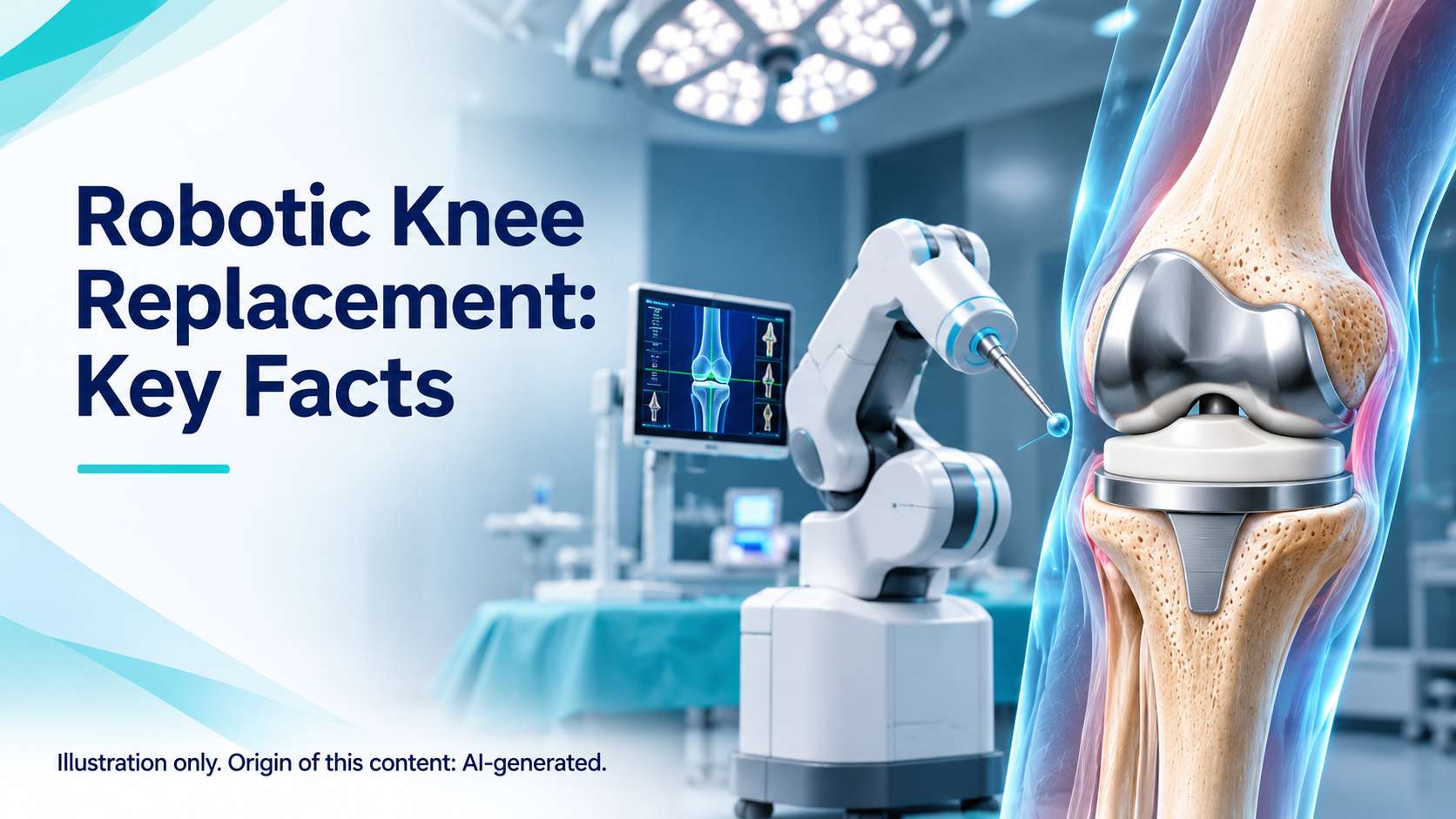
Bangalore, 26-11-2026: Robotic knee replacement is a subject many people with long-term knee arthritis now ask about. Dr. Nataraj H M, Orthopaedic Surgeon in Bangalore, says patients should understand what the technology can and cannot do before choosing a treatment.
What is robotic knee replacement?
In knee replacement, damaged joint surfaces are removed and covered with artificial parts called implants. In the robotic-assisted method, a computer-guided system helps the surgeon plan and carry out selected steps. The robot does not operate on its own. The surgeon remains in control and makes the clinical decisions. Planning and tools differ between robotic systems.
Who may be considered for it?
Knee replacement is usually discussed when joint damage causes pain that limits walking, climbing stairs or sleep, and non-surgical care no longer helps enough. Suitability for robotic assistance depends on:
- how severe the arthritis is and which parts of the knee are affected
- leg alignment, bone quality and ligament condition
- previous knee surgery
- general health, age and activity needs
It is not automatically the right choice for every patient.
How is the procedure planned and performed?
- The surgeon reviews symptoms, medical history, examination findings and X-rays or scans.
- A surgical plan is prepared for the patient's knee. Some systems need additional imaging.
- Health checks are done and anaesthesia is discussed.
- During surgery, the system provides guidance for bone preparation and implant positioning.
- Rehabilitation begins as advised by the treating team.
What does current research show?
Studies suggest that robotic assistance can improve the precision of implant alignment. Better precision has not consistently led to better results for patients. A large UK randomised trial, RACER-Knee, compared one robotic system with conventional knee replacement. At one year, both groups had similar recovery, mobility and pain levels, and serious adverse events were similar. Longer-term evidence is still needed.
Risks to understand
Robotic assistance does not remove the risks of knee replacement. These include infection, blood clots, bleeding, injury to nerves or blood vessels, stiffness, persistent pain, instability, fracture, and implant wear or loosening. Some patients may need further surgery. Anaesthesia also carries risks. Some robotic systems use pins placed in the bone, which have their own small risk of problems.
Recovery and rehabilitation
Recovery differs from person to person. A walker, crutches or a stick is commonly needed at first. Physiotherapy and home exercises help restore knee movement, muscle strength and balance. Returning to daily activities can take several weeks, and recovery may continue for months. Robotic assistance does not ensure faster recovery.
Alternatives
Depending on the condition, options may include:
- weight management, activity changes and physiotherapy
- pain-relief medicines and, in selected cases, injections
- joint-preservation procedures such as osteotomy
- partial knee replacement
- conventional or computer-assisted knee replacement
Questions to ask your surgeon
- Do I need knee replacement now, or can I try other treatment first?
- Is partial or total replacement more suitable for me?
- How would robotic assistance change my surgical plan?
- Will I need an extra scan, and what are the added costs?
- What are my personal risks and expected recovery plan?
This release is for general health information and does not replace a medical consultation.
About Dr. Nataraj H M
Dr. Nataraj H M, MBBS, MS (Orthopaedics), is an Orthopaedic Surgeon whose work covers knee, shoulder, arthroscopy and sports injuries.
Clinic: 5 Sports Health, Sarjapur Road, Carmelram, Bangalore.
More information: https://www.kneeandshoulder.net/robotic-knee-replacement/
Medically reviewed by: Dr. Nataraj H M,